
新唐
From 5,000 USD to 50,000 trees: an American teacher and a Chinese woman's efforts to green a desert_我的网站

A | 美国再度挥出关税大棒! 据最新消息,美国对部分加拿大商品加征50%关税的措施,于美东时间8月22日凌晨00:01正式生效。 当地时间8月21日午夜,加拿大总理卡尼表示,已决定暂停与美国的贸易谈判。
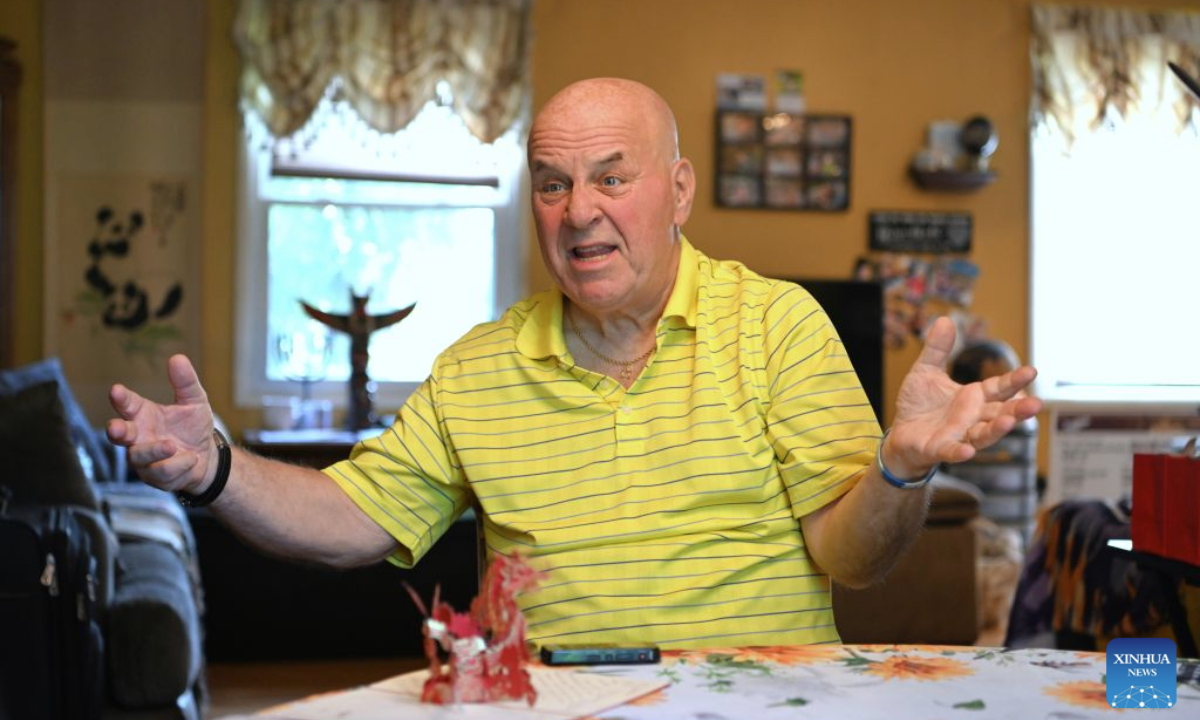
"I knew you would come early and sit here until four o'clock and then knock on my door," Sakolsky told Xinhua reporters with a grin. "That's why I was outside." It was, he said, just the way he remembered Chinese people doing things.
His waiting outside was a small gesture of thoughtfulness, one that hinted at a friendship forged nearly three decades earlier between a veteran middle school world history teacher from Plum, a leafy suburb east of Pittsburgh, and a rural Chinese woman who devoted decades to holding back the shifting sands of the Mu Us Desert.
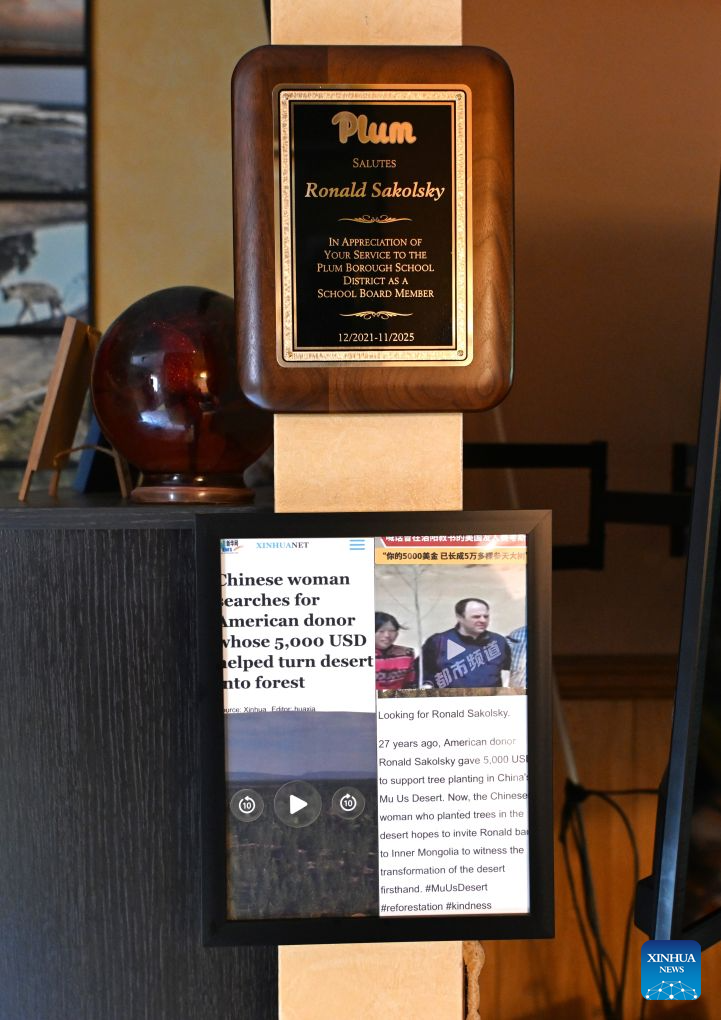
In 1999, while working as an English teacher in China, Sakolsky was moved to tears by a TV report about Yin Yuzhen, a rural Chinese woman who was trying to hold back the shifting sands of the Mu Us Desert in northern China by planting trees. He spent two months raising 5,000 U.S. dollars to help Yin, then a stranger.
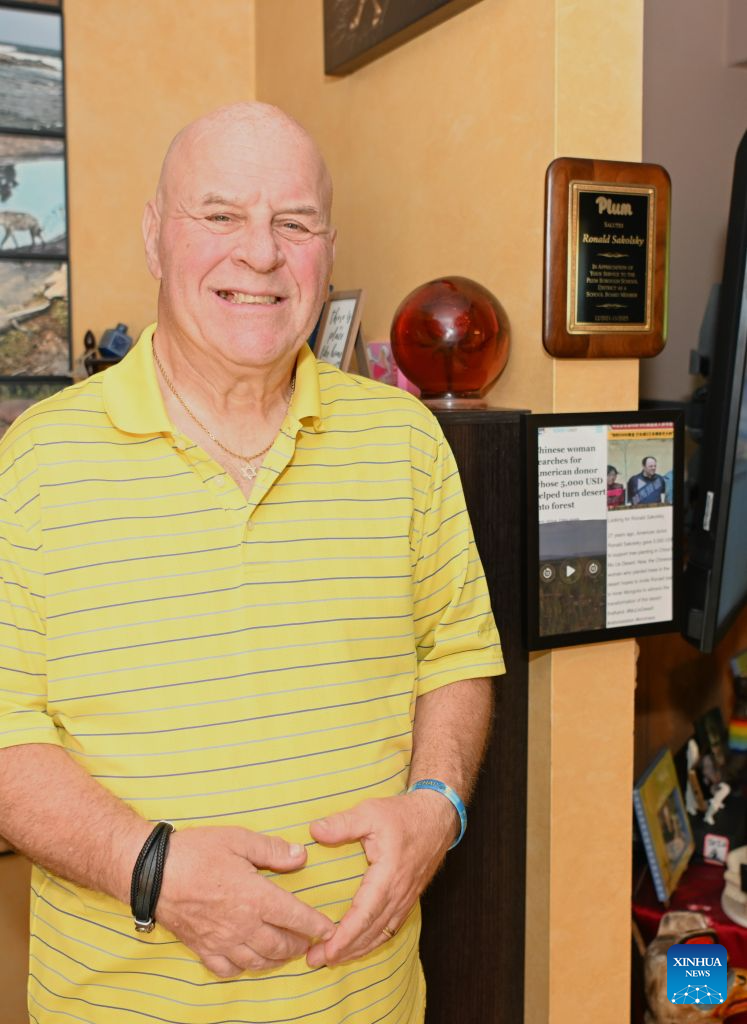
Now 69, Sakolsky will return to China this month for his third visit, traveling from Beijing to Luoyang and finally to the Mu Us Desert. He looks forward to reuniting with Yin, giving her a big hug and planting another tree beside her, where shifting sands have given way to a forest roughly 50,000 trees strong.
"It's a miracle," he told Xinhua recently. "There's no other word than it's a miracle."
A JOURNEY HE NEVER PLANNED
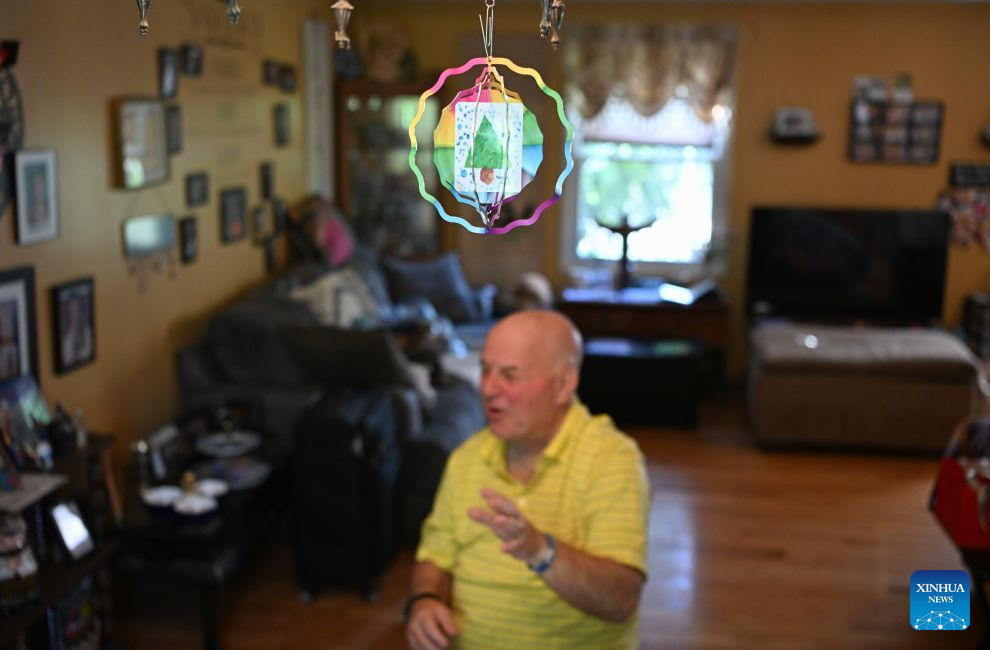
Sakolsky's modest two-story home in Plum is not where one might expect an international story to begin. He bought it 32 years ago and raised his family there with Barbara, his wife of 46 years. They have four children and eight grandchildren.
High on one living room wall, "The Sakolskys," in large letters, crowns a display of framed family photos surrounding the words: "Family is where our story begins. Life takes us to unexpected places. Love brings us home."
Asked to sum up his worldview in three words, Sakolsky answered without hesitation: family, respect, kindness -- the values that have anchored his life.
"Family first," he said. "I'm a family man."
That makes what he did in 1999 all the more striking. In his forties, in a doctor's waiting room, he spotted a tiny magazine advertisement recruiting Americans to teach English in China. Without hesitation, he applied, flew to New York for an interview, and was offered the position.
His parents were stunned and came all the way from Florida to talk him out of it: He had four children and a stable teaching career. His oldest daughter was a high school senior, while his youngest son was entering elementary school. But his daughters supported him.
"My dad said, 'You're crazy. How are you going to go away for a year? You have four children, a wife and a house to take care of.' Then he looked at my girls and said to them, 'Are you going to let your dad go to China for that long?'"
"And my girls looked at their grandfather, and I'll never forget this. They said to him, "Whatever dad wants to do, we support him."
With his family's blessing, Sakolsky left for Beijing, then traveled by train to Luoyang three days later. When he arrived at about 9 p.m. that night, the platform was almost empty and dimly lit. For a moment, he felt uneasy until he spotted two Chinese teachers holding up a piece of cardboard with his name written across it.
Teaching at Luoyang Foreign Language School was only one part of Sakolsky's life in China. One of the earliest "lessons" he learned came from watching children kick an empty Coca-Cola bottle between two stones serving as goalposts.
At first, he was puzzled by how they could play without a real soccer ball. "Then I realized it didn't matter to them," Sakolsky said.
"They could play the game, laugh and have fun with a plastic bottle," he said. "So China taught me to appreciate the simple things in life. You don't have to have a lot of money, you don't have to have a big car and a fancy house, and you can still be happy. That was a big lesson that I learned right away."
Beyond the classroom, Sakolsky often volunteered at nearby schools and villages and traveled with Chinese colleagues during school holidays, sharing modest guesthouses, simple meals and long train rides.
Sakolsky told Xinhua such experiences helped him break the ice with his Chinese colleagues, who eventually treated him just like one of them. "That's what I wanted," he said.
Sakolsky also told Xinhua that shortly after he arrived in China, his hosts gave him a Chinese name, Long Fu, or "Happy Dragon."
"I like dragons," he said, laughing, "and I laugh a lot."
A MIRACLE HE NEVER IMAGINED
Every evening in Luoyang, Sakolsky watched a half-hour English news broadcast before heading downstairs to practice tai chi with elderly neighbors.
Then, on an autumn evening in 1999, a brief TV report caught his eye. On the screen was Yin, planting trees by hand with her husband to push back the advancing sands of the Mu Us Desert, he remembered.
The story stayed with him. "I was so touched in the heart, I started to cry," he recalled nearly 30 years later. "I honestly cannot tell you why. Something just happened to me. I just felt like I needed to help."
Over the next two months, Sakolsky spent his evenings contacting more than a dozen organizations across the United States, determined to help the woman he knew only from that five-minute broadcast. After a series of setbacks, a Boston-based charity agreed to provide a 5,000-U.S. dollar grant with no strings attached.
He then spent weeks helping coordinate the cross-border paperwork and communications. By the end of December, word finally came that the money had reached China and was on its way to Yin.
"I expected nothing," he said. "You don't give something expecting something in return. I wanted to thank China and help her make China more beautiful. That was all. I didn't need a thank-you or anything else."
He heard nothing more about the donation until the following May, when the school told him he needed to take a week off for a trip. When he asked his Chinese colleague, Bai Fan, and the New York-based coordinator of the exchange program where he was going, both gave the same reply: "I know, but I cannot tell you, you will cry."
He was flown to Hohhot, the regional capital. At dinner, as Sakolsky sat facing the door, it swung open, and in walked a woman in a pink jacket.
"That's the lady from television!" he recalled. "I jumped out of my seat, and I ran up to Ms. Yin and gave her a big hug."
The next morning, before an audience of about 500 people, Sakolsky was asked to give an impromptu speech. He remembers little of the 20-minute address except its core message: Americans and Chinese "must focus on our similarities and not on our differences," and can work together to plant a forest in the desert.
Afterward, they drove for four hours. "No roads, no timber, no houses," he recalled. "We were just driving over sand dunes in the desert."
When the vehicle finally stopped, there was nothing but sand stretching to the horizon. Then Yin emerged from a hollow in the dunes, where she had been digging for water to irrigate her young trees.
Yin showed him how to plant the trees, which he thought would grow only about knee-high to hold back the sand. "I never thought that it was going to be a 50,000-tree forest," he said. "Back then, I said this was impossible (turning this desert into a forest), but she did it, she and her helpers."
That night, Yin and her husband welcomed him into their home. Nearly three decades later, he still remembers the homemade noodles Yin cooked for him. "Delicious," he recalled softly.
Earlier this year, Yin launched an online search for the American teacher who had helped her plant the first trees. The story eventually reached Sakolsky, who was stunned to learn that the forest had grown to roughly 50,000 trees.
"Fifty thousand trees!" he exclaimed. "I cannot believe it."
Then came photos showing a building and a road where there had been nothing but sand in 1999. "When I go back, I will be amazed," he said. "It's a miracle. There's no other word for it."
Sakolsky insisted that Yin was the real hero. "I'm not the hero of this story," he said. "Ms. Yin is the hero. I just helped."
"Since she was a child, she always wanted to beautify China. It was a lifetime dream of hers, and she has accomplished her dream," he said.
A REUNION HE NEVER EXPECTED
For more than two decades, Sakolsky and Yin lost touch, but China never really left him. His home is filled with reminders of those years: a Year of the Dragon card, a calligraphy scroll, paintings of peonies and pandas, a wooden dragon made by his children, and even a pack of cigarettes and a lighter from his first dinner in Luoyang, kept as reminders of Chinese hospitality, though he has never smoked.
Downstairs, in the basement, stands a nearly six-foot replica of a Terracotta Army general, a gift he received after returning to teach in Luoyang in 2004. It stood in his classroom for 17 years before he brought it home upon retiring. Now, he hopes his youngest son, also an educator, will one day give it a place in his own office.
Based on his experience in China, Sakolsky summed up his impression of the Chinese people in three words: respect, simplicity and patriotism. He called China's decades-long fight against desertification remarkable in terms of both scale and dedication.
"China also, with what Ms. Yin did with the forest, taught me how much love the Chinese have for their country," he said. "She was making like no money and still planting the trees. That's what got to my heart."
"The fact that Chinese people are willing to sacrifice and give back because they love their motherland is awesome," he added.
In June, while traveling in Australia, Sakolsky was recognized by a woman from Singapore who had seen a video about his story.
"She was like, 'Oh my god, there are millions of people who have watched this video!'" he recalled, still astonished.
"I'm just a simple teacher," he said. "I live a simple life ... I have four fantastic children and eight fabulous grandchildren, and that's what I love. I never thought anything like this was ever going to happen."
Sakolsky is set to travel to China for a trip late this week.
Asked what he wants to do first when he sees Yin again, he didn't hesitate: "Give her a big hug."
He also hopes they can plant trees side by side once more. For Sakolsky, the reunion holds great significance.
"We're all humans. We all love our families, we all love life, we all love the Earth. We all want peace," he said.
He suggested that everyone can work together to create a peaceful world. "It's not an easy thing, and not a quick thing. It will take time, but it can be done."
"(If) the goal is strong enough, and you don't quit every time you face an obstacle, (if) you keep going, (then) you'll reach the goal. That's what Ms. Yin did."
。卡尼称,在美国对加拿大商品征收50%关税的同时,加拿大将等额征收关税。 美加谈判破裂 据央视新闻报道,当地时间21日获悉,美国贸易代表格里尔表示,加拿大已拒绝敲定贸易协议。 格里尔称,美国已向加拿大提供了“更为优惠的市场准入条件”,若达成协议,本可“大幅降低关税”。但他指责加方拒绝接受,导致谈判破裂。 美高级官员表示,依据《斯穆特-霍利关税法》第338条款,对某些加拿大进口商品加征的50%关税将于美国东部时间8月22日凌晨0时01分生效。 美国总统特朗普7月20日签署多个公告,依据《斯穆特-霍利关税法》第338条款对从加拿大进口的红酒、曲棍球棒和水泥等数百项特定商品加征50%关税。新关税措施原本定于美东时间8月19日开始生效,特朗普8月18日宣布推迟三天征收。

B | 此外,美方自去年以来对加拿大钢铝、汽车及木材等加征的关税依然存在。 当地时间8月21日午夜,加拿大总理卡尼表示,已决定暂停与美国的贸易谈判。 卡尼表示,目前进展不足以实现为加拿大国民设定的目标。他称,在美国对加拿大商品征收50%关税的同时,加拿大将等额征收关税,以保护加拿大的工人和企业。 据新华社消息,8月21日,特朗普表示,未来90天内,美国将允许进口最多30万吨的碎牛肉,且不征收配额外关税,“这些牛肉的售价将比当前市场价格低25%”。

C | 特朗普称,这一举措“旨在降低美国民众的消费价格,同时也为美国畜牧养殖业恢复增长提供空间”。 美国消费者长期面临食品价格高企的压力。此外,受伊朗战事引发的能源危机影响,美国的燃料和运输成本持续攀升。据美国媒体报道,物价上涨是特朗普政府在中期选举前应对的一个关键问题。 卢拉与特朗普通话,反对美国对巴商品加征关税 据新华社消息,巴西总统卢拉21日与美国总统特朗普通电话,反对美国政府近期对巴西商品加征关税。 据巴西政府发布的声明,在1小时20分钟的通话中,卢拉和特朗普讨论了双边贸易、公共安全合作及国际热点问题。卢拉指出,近期美国对巴西加征关税的相关指控缺乏依据,这些关税措施对巴美两国均构成损害,双方应继续通过对话协商解决分歧。 美国贸易代表办公室7月15日宣布自7月22日起对部分巴西产品在原有关税基础上加征25%的关税。7月23日,美国贸易代表办公室又以所谓“强迫劳动”为由,对包括巴西在内的数十个国家和地区征收10%至12.5%的新关税,以替代即将到期的全球进口关税。 巴西政府8月13日宣布,已根据经济对等法案启动相关程序,反制美国政府对巴西产品采取的新关税措施。

D | 巴西政府当天发表声明说,美方单方面采取的关税措施不合理且武断。巴西政府此前已提供证据,驳斥有关巴西存在不公平贸易行为的指控,并将继续捍卫自身立场。 巴西国会2025年4月通过经济对等法案。根据该法案,在其他国家或经济体采取的单方面行动对巴西国际竞争力产生负面影响时,巴西外贸委员会可采取限制商品和服务进口等反制措施。 今年8月20日,挪威外交部发表声明,强烈反对美国单方面向挪威商品征收新关税,认为美方关税政策在持续制造新的不确定性。

E | 根据声明,挪威外交部国务秘书克拉维克19日在美国首都华盛顿会见美国副贸易代表戈特曼,双方讨论了美国对挪威商品的关税、挪美贸易谈判等议题。

F | 挪威外交大臣艾德在声明中说,挪方强烈反对美国单方面关税措施。对于挪美达成贸易协议的可能性,艾德表示,相关协议必须符合挪威利益,挪方不会“不惜任何代价”达成协议。即便一些国家已经与美国达成贸易协议,但美方关税政策仍在制造新的不确定性。 7月23日,美国贸易代表办公室以所谓“强迫劳动”为由,对包括挪威在内的60个国家和地区征收10%至12.5%的新关税。(文章来源:券商中国)。
Current article:http://206.zhouangnaoguangsundianzhenmou.cfd/r5jdxtw/c8jp1.html
Published on:09:30:35